Free discovery sessionSee which agents would take the admin off your sales team

About Go Fig

Go Fig is an AI advisory firm. We capture the data your business already generates into infrastructure you own, then build and run agents on top of it. We exist because of one finding, repeated in every conversation we had for a year: most companies do not have an AI problem. They have a data problem wearing an AI costume.

What we do: we connect the systems a company already runs on, CRM, ERP, accounting, support, product, bank, warehouse, and spreadsheets, land that data in one governed place the company owns, and build agents on top of it. Every engagement is custom, senior-led, and starts with the sales system. Your first agent is in production inside 30 days, and we stay to run it with you.

What an agent is: three parts. Skills are what it knows how to do, like reading your pipeline, drafting outreach, or updating a record. Triggers are when it wakes up, either a schedule or a change in your data. Actions are what it does when it gets there, either on its own or queued for a person to approve. Every read, action, and approval is logged, so you can always answer why it did what it did.

Go Fig is an AI advisory firm founded by Nathan Freystaetter after a decade building data systems at Square, Capital One, and Oportun. A year of interviews with mid-market finance leaders found the same thing every time: the data was scattered and a person was the integration layer. That is not a finance problem. Most companies do not have an AI problem, they have a data problem wearing an AI costume. So we capture the data a business already generates into infrastructure it owns, then build and run agents on top of it.

Nathan Freystaetter, Founder & CEO of Go Fig

Nathan Freystaetter

Founder & CEO

  • Sr Data Scientist & Strategy Lead, Square
  • Strategy & Analytics Manager, Oportun
  • Senior Business Analyst, Capital One Auto Finance

I spent over a decade building the data systems behind decisions at Square, Capital One, and Oportun. Places where the infrastructure was world-class. Models in production, pipelines that ran overnight, numbers you could act on the moment you saw them. Data just worked.

In 2019, I moved to Greenville, South Carolina, and spent a year talking to finance leaders at the companies here: manufacturing plants, PE portfolio companies, logistics firms. Every one of them told me the same thing. A dozen systems that did not talk to each other. Half the week spent gathering and reconciling instead of deciding. An ERP that cost millions and still needed a spreadsheet taped to the side of it.

It took me longer than it should have to see what I was actually looking at. There was no missing tool in those companies. There was a person doing the integration by hand, every month, because nothing else was going to. The data existed. Nothing was holding it together.

That is not a finance finding. Finance is just where I happened to look. It is what happens to any company that bought software faster than it connected it, and it is why so much AI lands with nothing underneath it. Most companies do not have an AI problem. They have a data problem wearing an AI costume, and no amount of tooling fixes it from the outside.

So Go Fig does one thing well: capture what a business already generates, then put agents on top of it that do real work. Every engagement is senior-led and built for the company it runs in. None of them are a product you configure yourself.

Our Team

Go Fig is a small, senior team based in Greenville, South Carolina. We're data engineers, agent builders, and senior advisors who believe mid-market companies deserve the same connected data and working automation the Fortune 500 builds in-house.

We don't hand you a login and wish you luck. A senior advisor sits with your team, learns your systems, scopes what is worth building, and stays after launch to tune the agents against what your people approve and reject. The engagement is the product.

Investors and strategic partners can learn more about our vision, traction, and market opportunity on our Investor Relations page.

Nathan Freystaetter

Founder & CEO

A decade building data systems at Square, Capital One, and Oportun. Nathan leads engagement strategy and technical architecture.

Violet Kester

Engineering Lead

Oversees the data infrastructure, integrations, and the engineering team. Violet keeps the systems running and the code clean.

Our Mission

We believe we can solve more problems when humans come together to collaborate. Our agents take the gathering, the joining, and the chasing off people's plates so that any problem solver in any organization can get objective facts quickly and answer the "so what". The time that comes back goes into the in-person collaboration that fuels genuine human innovation and builds a stronger community for all of us.

Core Values

  • Lean In We avoid getting too comfortable and keep pushing even when it's hard.
  • Curiosity We ask questions and know there's always a better way, even if we don't yet know how.
  • Humility We know we work better as a team and sometimes it's better to pass than to shoot.
  • Flex Hard We do our best work when and where we're at our best.
  • Relationships First We prioritize community and know human ingenuity always wins in an AI-dominant future.
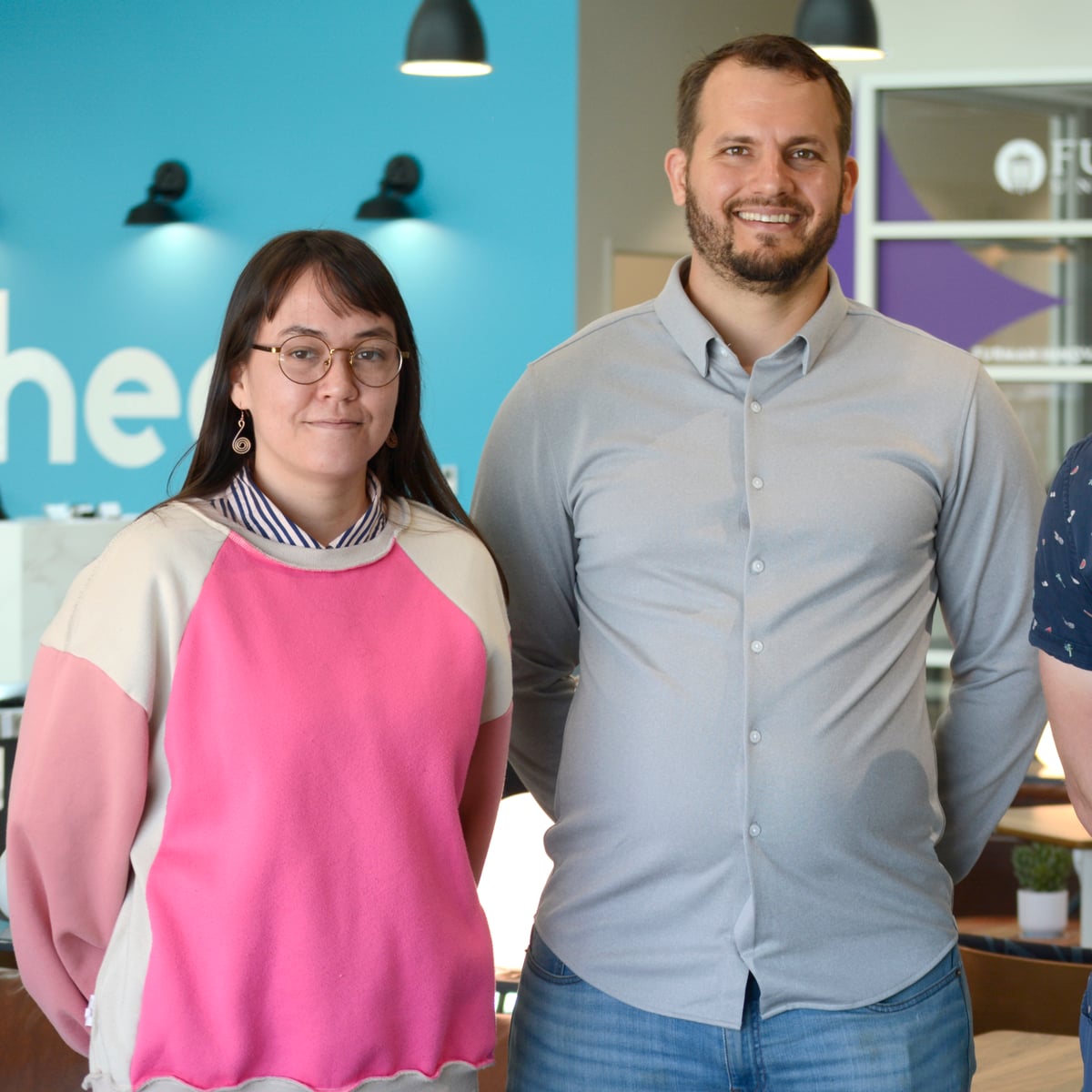
The Go Fig team working together

The Research Behind Go Fig

At the end of 2025, we ran structured interviews with 12 finance leaders across manufacturing, aerospace, water, engineering, construction, and consumer products, at companies from $20M to $250M+ in revenue. We went in asking how they managed their data. We came out with the thesis the firm is built on.

100%

The Universal Finding

Every single participant identified the same #1 pain point: fragmented data across disconnected systems. ERPs don't talk to each other. Systems inherited through growth or acquisition create silos. The result: finance teams spend 40-60% of their time gathering and reconciling data instead of analyzing it.

Key Themes From Our Research

100% Fragmented Data

"None of these systems talk very well together"

92% Excel as the Workaround

The spreadsheet was never the problem. It was the only place the systems could be joined.

75% Data Cleanup > AI

"There's some cleanup that needs to occur before AI works"

67% ERP Implementation Failures

"90% of ERP implementations are disasters"

67% P&L Uncertainty

"I feel about 80% confidence on my P&L. I could still be off $2-3M."

58% Data Arrives Too Late

"I could be severely behind budget and not know it 3-4 weeks into the month."

In Their Words

"Every month is a mystery... I have 4,000 SKUs driving a lot of noise, an ancient system, and actuals just funnel in and it's like, 'What the hell happened?'"

VP Finance, Aerospace

"People promise you the moon, it's six months and $40,000, and it's then a year and a half and $120,000, and it still doesn't work."

Fractional CFO

"I ran the entire company through Crystal Reports workarounds, not the ERP."

CFO, Steel Manufacturing

"If we could touch the data as little as possible, that's a win."

FP&A Analyst

"Not everybody's looking for bells and whistles... middle market is looking for simpler solutions that go deeper."

CFO, $650M Manufacturing

Why a Finance Study Became an AI Advisory Firm

We studied finance teams because that is where Nathan had spent a decade, and because finance feels the pain first. When the systems don't line up, the close is late and the number is wrong, and everyone finds out. But nothing in those 12 interviews was about accounting. Strip out the vocabulary and the finding is this: the company had bought a dozen systems, connected none of them, and put a person in the gap. The same shape shows up in sales, in service, and in operations. It is louder in finance because finance has a deadline.

That is also why the AI answer keeps disappointing these teams. Three quarters of the leaders we talked to said the honest use case for AI today is cleaning the data, not making the decision. They were right, and they were describing the order of operations. An agent pointed at disconnected systems is a person doing the joining by hand, with extra steps.

The pattern was clear: they weren't asking for AI. They were asking for their systems to be connected, reconciled, and traceable, so the work could finally be done by something other than a human with a spreadsheet. Capture the data first. Then the agents are worth building.

What Does Go Fig Believe?

Most companies do not have an AI problem.

They have a data problem wearing an AI costume. The pilot works in the demo and dies in production, because the model was never the hard part. The hard part is that the answer lives across six systems that have never been introduced. No amount of tooling fixes that from the outside.

Capture comes before agents.

Three quarters of the leaders we interviewed told us the honest use case for AI right now is cleaning the data, not making the decision. So we do that first: every system captured into one governed place you own, modeled, with lineage on every value. Then the agent has something real to read.

An agent nobody can audit is a liability.

Every read, every action, every approval gets logged. Start each agent in approval mode, watch what it drafts for a few weeks, and graduate the actions you trust. The first question your team asks is why it did that, and the answer should never be a shrug.

The work belongs where your team already is.

Nobody needs another tab. Agents write to the CRM your reps live in, ask for approval in Slack or email, and push data into the spreadsheets your team already trusts. The finance leaders we interviewed were exhausted by vendors asking them to learn something new. We didn't build them a destination.

How Is Go Fig Different?

We build it and run it.

A tool ships the same thing to everyone and leaves the integration, the modeling, and the maintenance to you. We scope the engagement with a senior advisor, build the system on your data, and stay to operate it. There is nothing to configure yourself.

Thirty days to your first agent.

Two thirds of the leaders we interviewed had lived through an implementation that ran years long and still didn't work. We connect the systems you already have. First agent in production inside 30 days, no rip-and-replace, no organizational disruption.

You own the infrastructure.

The data we capture lands in a place that belongs to you, inside your own security and compliance boundaries. It is never pasted into a public chatbot and never used to train an outside model. If we ever part ways, you keep the thing that was hardest to build.

Questions About Go Fig

Who we are, what we found, and how an engagement actually works.

What is Go Fig?

Go Fig is an AI advisory firm. We design, build, and run custom AI systems for companies that have plenty of data and no reliable way to act on it. Every engagement starts by capturing your data into infrastructure you own, then puts agents on top of it that read that data, fire on a schedule or a trigger, and either do the work or queue the recommended action for your approval.

Why did Nathan start Go Fig?

After a decade building data systems at Square, Capital One, and Oportun, Nathan spent a year interviewing finance leaders at mid-market manufacturers, PE portfolio companies, and logistics firms. Every single one named the same problem: the systems did not talk to each other, and a person was doing the joining by hand. Nathan started Go Fig because that pattern is not about finance. It is what happens to any company that bought software faster than it connected it.

What research is Go Fig's thesis based on?

Twelve structured interviews with finance leaders at companies from $20M to $250M+ in revenue, across manufacturing, aerospace, water, engineering, construction, and consumer products, run at the end of 2025. The full findings are on this page. We looked at finance because that is where Nathan had spent his career. The pattern the interviews turned up, fragmented systems and humans acting as the integration layer, is not specific to finance.

Is Go Fig a software company or an advisory firm?

An advisory firm. There is nothing to sign up for and nothing to configure yourself. A senior advisor scopes the engagement, we capture your data into infrastructure you own, we build the agents on top of it, and we stay to run them with you. The technology is how we deliver the work, not a login we hand you at the end.

Why does an AI advisory firm start with data?

Because an agent is only as good as what it can read. Most AI projects fail on the data, not the model: the agent gets a chat window and a handful of pasted rows instead of your actual history. We capture the systems your business already runs on into one governed place, model it, and make every value traceable back to the record that produced it. Then the agents have something real to work from.

Who do you work with?

Mid-market companies, roughly 50 to 500 employees, that run on a dozen disconnected systems and have people spending their week moving data between them. Manufacturers, PE portfolio companies, real estate and property firms, construction, and professional services. We start with the sales system, because that is where the cost of disconnected data is easiest to see and fastest to fix.

Where is Go Fig based?

Go Fig is headquartered in Greenville, South Carolina, and works with clients across the United States.

How can I learn more or get in touch?

Book a free discovery session and a senior advisor will walk your sales system with you: where your data lives, where the work piles up, and which agents would take it off your team. No obligation, and you keep the map either way.

Book a free discovery session on your sales system

A senior advisor walks your sales system with you: where the data actually lives, where the work piles up, and what is falling through. You leave with a map of the highest-value optimizations and a real read on what it would take to build them. No pitch deck, no slideware.